
By Michael Hayes
Quick Answer: The xidu philbook touchscreen 2-in-1 laptop may fit light browsing, notes, videos, and basic documents, but buyers should check the exact model, Windows support, battery condition, charger, hinge, storage, return policy, and warranty before buying, especially if the unit is used or old stock.
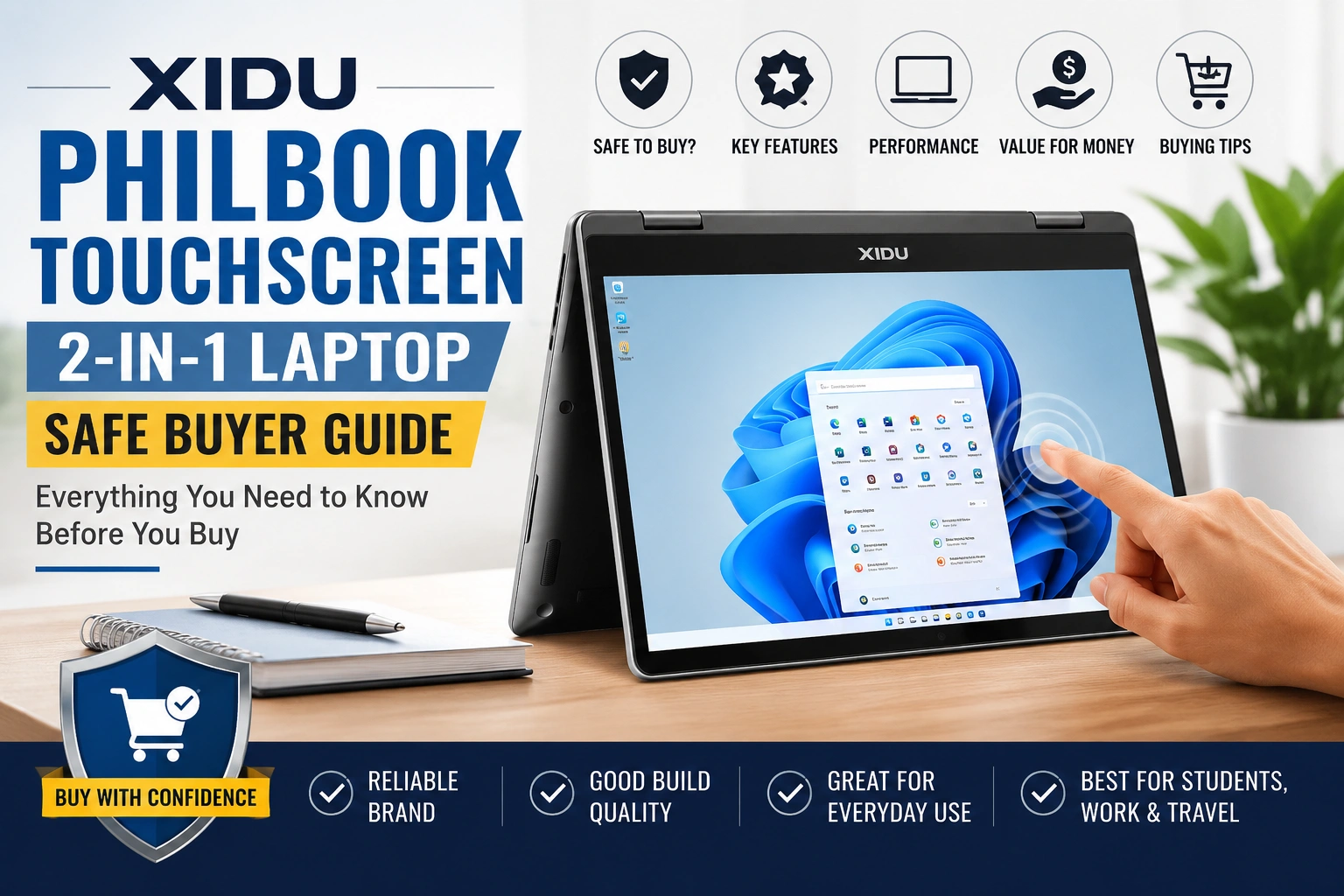
The xidu philbook touchscreen 2-in-1 laptop is a budget convertible notebook category that attracts buyers because it combines a small laptop, touchscreen, and folding hinge. Many listings describe older PhilBook versions with lightweight designs, Windows 10-era hardware, modest RAM, small storage, and tablet-style modes.
This guide is for USA buyers comparing new-old-stock, used, renewed, marketplace, or imported listings. It focuses on specs, battery health, display, ports, storage, Windows support, charger safety, warranty clarity, and realistic use. It does not assume every PhilBook listing has the same configuration.
XIDU PhilBook Budget 2-in-1 Touchscreen laptop Buyer safetyTrust and safety note: This article is for general educational and buyer-information purposes only. It does not guarantee performance, compatibility, durability, repair results, or product availability. It does not replace advice from a qualified technician, manufacturer, seller, or warranty provider. Readers should seek professional help for severe, worsening, unusual, persistent, overheating, battery, charging, or electrical issues.
What the XIDU PhilBook Is Best Used For
The PhilBook is best understood as a light-duty convertible laptop. It can make sense for web browsing, email, simple notes, video streaming, light school tasks, basic documents, travel backup use, and occasional tablet-style reading. The 2-in-1 hinge can help when you want tent mode for videos or tablet mode for reading.
The main caution is age and configuration. Some PhilBook listings are based on low-power Intel Atom or Celeron-era hardware, small eMMC or SSD storage, and Windows 10-era software. That does not make the device useless, but it means expectations should be modest. If you ignore this, you may buy a laptop that feels slow with many tabs, struggles with current apps, or has limited storage for updates.
A beginner should check the exact product title, RAM, storage, display size, charger, Windows version, return window, and seller rating. A more experienced buyer should check processor generation, storage type, BIOS support, driver availability, battery condition, hinge wear, and whether the device can safely run the software you need.
Comparison Table: XIDU PhilBook vs New Budget 2-in-1
Note: Many PhilBook listings are Windows 10-era devices. Microsoft states that Windows 10 support ended on October 14, 2025. Before buying, check whether the device can meet your security and software needs.
How to Evaluate a PhilBook Listing Before You Pay
The biggest buyer risk is vague marketplace wording. A listing may say “PhilBook,” “PhilBook Max,” “PhilBook Pro,” or “Y13,” but the processor, RAM, storage, display, charger, and condition may be different. The xidu philbook touchscreen 2-in-1 laptop keyword often leads to older product pages, reposted listings, and mixed model information.
Beginners should ask the seller for photos of the exact unit, the model label, Windows version, charger, battery report if available, and a clear return period. Experienced buyers should ask about eMMC vs SSD storage, USB ports, mini HDMI, microSD behavior, screen resolution, hinge stiffness, BIOS password status, and whether the device has been reset safely.
Use this buying flow before checkout.
Ask whether it is PhilBook, PhilBook Pro, PhilBook Max, or another XIDU convertible version.
Check RAM, storage type, processor, display size, ports, charger, and Windows version.
Look for hinge cracks, screen marks, dead touch areas, missing screws, battery swelling, or loose charging.
Check return window, warranty, who pays return shipping, and whether the charger is original or clearly rated.
Run your real apps, test Wi-Fi, charge safely, fold the hinge gently, and back up files before major changes.
If the seller cannot confirm the model, battery condition, charger, and return policy, the safer decision is to skip that listing. A low price does not help if the laptop cannot be returned or safely charged.
Product, Tool, and Specification Fit Table
Step-by-Step Setup and First-Day Testing
After buying a xidu philbook touchscreen 2-in-1 laptop, do not wait weeks before testing it. Older budget convertibles should be checked during the return window. The goal is to confirm that charging, display, Wi-Fi, storage, keyboard, touch, hinge, and Windows behavior match the listing.
Inspect before charging. Check the charger, cable, DC port, hinge, screen glass, keyboard, and bottom case. Do not charge a unit with swelling, liquid signs, burned smell, or a damaged charger.
Check Windows status. Confirm the Windows version, activation, updates, storage space, and account setup. If the laptop has Windows 10, review Microsoft’s current support guidance before using it online.
Test daily apps. Open your browser, document editor, video call app, streaming site, and cloud storage. If it feels slow during your real routine, do not assume it will improve later.
Test convertible modes gently. Fold the hinge slowly, check tent mode, stand mode, tablet mode, and keyboard lock behavior. Stop if the hinge clicks, cracks, or moves unevenly.
Back up before resets. If you plan to reset Windows, reinstall drivers, or remove old user data, copy any needed files first. A rushed reset can cause data loss.
Tip: I usually notice that older budget 2-in-1 laptops reveal their limits quickly when you open several browser tabs, run a video call, and type a full page. Test the device with your real routine, not only the desktop screen.
Performance, Windows Support, Battery, and Ports
Performance depends on the exact PhilBook version. Older Atom or Celeron-class configurations can often handle light browsing, writing, and media playback, but they may feel limited with many tabs, large spreadsheets, modern creative apps, or heavy multitasking. Small storage can also make Windows updates and recovery harder.
Windows support is a major buying factor. Many listings are Windows 10-era devices, and some may not meet Windows 11 requirements. Check Microsoft’s Windows 11 specifications before planning an upgrade. If you plan to keep Windows 10, review Microsoft’s current support and security options.
Battery and ports matter because older devices may have worn cells, loose DC ports, or missing chargers. The original PhilBook documentation describes DC charging and warns buyers to use the supplied power adapter only. If the supplied charger is missing, ask the seller for exact power details and avoid unverified adapters.
This priority meter shows what usually matters most when evaluating this device category. It is a practical guide, not scientific test data.
The chart’s lesson is clear: charger, battery, Windows support, and storage matter more than a clean product photo.
Safe Laptop Routine vs Risky Laptop Routine Table
Charging, Battery, and Accessory Safety
Battery safety is one of the most important checks for a used or older convertible. The PhilBook manual describes an internal, non-removable rechargeable lithium polymer battery and warns users not to open the back cover or remove the battery. Battery replacement should be handled by an authorized service route or a qualified repair professional.
For online buying, review the seller’s return terms before paying. The FTC offers online shopping guidance for checking seller details, returns, and refunds. For USB accessories, the USB-IF cable and connector guidance can help you understand why connector shape alone does not prove safe or full compatibility.
Warning: Do not use a charger, cable, or port that sparks, smells burned, becomes unusually hot, buzzes, or feels loose. Stop using the device and contact the seller, manufacturer, warranty provider, authorized service center, or a qualified repair professional.
This safety path separates normal setup confusion from issues that should stop normal use.
Wi-Fi setup, Windows activation, or display scaling may need settings changes. Handle these calmly and back up files before major resets.
A charger fits physically but does not charge well, or a dock does not work. Verify ratings and avoid guessing with power accessories.
Heat, battery swelling, burning smell, sudden shutdown, sparking, or liquid damage is not a normal setup issue. Stop using the device.
Use seller, manufacturer, warranty, authorized service, or qualified repair support for severe, repeated, battery, charging, or electrical issues.
If the issue involves power or battery behavior, do not keep experimenting. The safer choice is support, return, or professional inspection.
Common Problems and Safer Fixes
Common problems with the xidu philbook touchscreen 2-in-1 laptop category include slow performance, low storage, weak battery life, touch issues, loose hinges, missing chargers, outdated Windows support, and unclear warranty coverage. Some issues are normal for older low-cost devices, while others are safety warnings.
Start with safe checks: restart, close unused apps, check storage space, use the correct charger, test one accessory at a time, and back up before resets. Do not open the laptop, replace the internal battery, force a hinge, or use unknown power adapters as beginner fixes.
Problems vs Possible Reasons Table
This warning dashboard highlights signs that should move the device out of normal use.
Case bulging, screen lifting, sudden shutdowns, or extreme heat can point to a serious battery issue. Stop using the laptop.
Sparks, burning smell, buzzing, or a loose charging connection should not be ignored. Do not keep testing the charger.
Cracks, uneven movement, or screen wobble can worsen with folding use. Contact support before forcing the hinge.
Missing files, failed updates, or storage errors need backup first. Do not reset or reinstall without saving important files.
Safety Note: Do not open the laptop, replace the internal battery, force a loose port, or bypass charging warnings. Internal repair can cause electric shock, battery damage, data loss, warranty issues, or device failure.
What Careful Buyers Check That Beginners Often Miss
Careful buyers check more than the product photo. They compare model name, processor, storage type, RAM, charger, Windows support, battery condition, hinge movement, touch accuracy, return terms, and repair practicality. They also check whether the seller is offering a current, refurbished, open-box, imported, or used unit.
A xidu philbook touchscreen 2-in-1 laptop can be a reasonable low-cost device for light use if the price is low enough and the support path is clear. It is a poor choice if you expect modern laptop speed, long future software support, easy battery replacement, or a strong warranty from a major US retailer.
The dashboard below matches the device to practical routines.
A possible fit for simple notes, PDFs, and reading. Check battery condition and screen touch before relying on it for school.
Useful as a backup browser and document device if the charger and battery are safe. Do not make it your only work computer without testing.
Can support simple streaming and browsing when the unit is healthy. Watch for slow loading, storage limits, and Wi-Fi reliability.
Use caution. If you need current Windows support, strong speed, or long-term parts availability, a newer budget laptop may be safer.
Mistake vs Better Choice Table
When to Contact a Technician or Manufacturer Support
When to contact a technician or manufacturer support: Get help if there is overheating, battery swelling, screen lifting, sparking, burning smell, sudden shutdowns, liquid damage, loose charging ports, cracked display, failed touch input, repeated charging failure, or hinge damage.
Also contact the seller, manufacturer, warranty provider, authorized service center, or qualified repair professional before opening the device, replacing internal parts, reinstalling Windows in a risky way, or using unverified chargers. This protects safety, data, and possible warranty coverage.
FAQ
Is the XIDU PhilBook still worth buying in the USA?
It may be worth considering only for light tasks if the price, condition, warranty, return policy, charger, and Windows support status are clear. Avoid it for heavy multitasking, modern gaming, or unsupported listings.
What should I check before buying a used XIDU PhilBook?
Check the exact model, processor, RAM, storage type, touchscreen, hinge, charger, battery condition, Windows version, seller return policy, and whether support or replacement parts are available.
Is the XIDU PhilBook good for students?
It may work for notes, web browsing, reading, and light documents. It is not ideal if the student needs long battery life, strong performance, current Windows support, or demanding school software.
Can the XIDU PhilBook run Windows 11?
Do not assume it can run Windows 11. Check Microsoft’s Windows 11 requirements and the exact PhilBook processor, TPM, RAM, storage, and firmware support before planning an upgrade.
What are the biggest risks with older budget 2-in-1 laptops?
Common risks include weak performance, small storage, worn batteries, outdated Windows support, loose hinges, charger issues, limited parts, and unclear warranty or seller support.
Should I replace the battery myself?
No, beginners should not replace the internal battery themselves. Battery work can create safety, data, and warranty risks. Use the manufacturer, seller, authorized service, or a qualified repair professional.
When should I contact the seller, manufacturer, or technician?
Contact support for overheating, swollen battery signs, sparking chargers, burning smells, liquid damage, loose ports, hinge cracks, display failure, sudden shutdowns, or unclear warranty coverage.
Final Thoughts
The xidu philbook touchscreen 2-in-1 laptop can be a practical light-use convertible only when the exact model, charger, battery, storage, touchscreen, hinge, Windows status, seller warranty, and return policy are clear. For severe, unusual, persistent, overheating, battery-related, charging-related, hinge-related, or electrical issues, contact the seller, manufacturer, warranty provider, authorized service center, or qualified repair professional.
